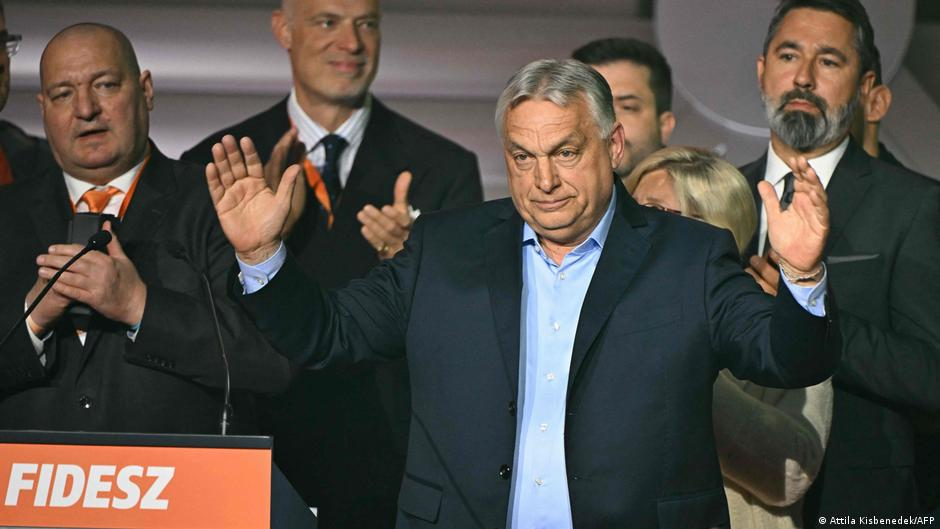
Brussels, April 2026 – In a tense atmosphere, Hungarian Prime Minister Viktor Orbán has called upon the European Union to repay all withheld financial resources to Hungary. The announcement of legal action against the blockade marks a further stage of escalation in the long-standing dispute over the rule of law, sovereignty, and the distribution of EU funding.

According to various reports, Orbán stated that Hungary is demanding the return of all funds that Brussels has withheld based on political conditions. He described the retention as an illegal form of financial blackmail against a member state and announced that he would make no compromises. The European Commission, under President Ursula von der Leyen, initially reacted with restraint; reports suggest she remained without an immediate, sharp rebuttal during the session in question.
The conflict primarily centers on funds from the EU Recovery Fund and Cohesion Funds. Hungary is entitled to several billion euros, a significant portion of which—estimates suggest around 70 percent of certain tranches—has been blocked due to concerns regarding anti-corruption measures, judicial independence, and compliance with European values. Specifically, the amounts involved are in the range of five to eight billion euros, intended for infrastructure, education, and regional development. The Commission had linked the disbursement to reform progress, which Budapest, in its assessment, has not sufficiently implemented.
Orbán argues that the blockade violates existing EU treaties and constitutes political interference in domestic affairs. He emphasizes that Hungary protects its borders and prioritizes national interests, which has led to tensions with Brussels’ mandates in areas such as migration and legal reforms. Critics accuse him of undermining democratic standards to maintain control. The Hungarian government, however, sees this as an attempt to discipline dissenting positions using financial means.
The Neue Zürcher Zeitung and the Financial Times have reported on the confrontation, describing it as unprecedented. Orbán reportedly made it clear that the systematic withholding of Hungarian funds would no longer be accepted. Should Hungary file a lawsuit before the European Court of Justice, it could have far-reaching consequences. A victory for Budapest would encourage other member states to make similar demands—from the Netherlands and Denmark to Poland. Experts warn that this could weaken the EU Commission’s enforcement power in linking financial resources to reform requirements.
Ursula von der Leyen is under pressure. The Commission has tasked legal counsel with reviewing the demands. Internal analyses reportedly suggest that parts of the blockade could be legally vulnerable, even if the official line continues to insist on the necessity of reforms. A direct confrontation in court would further fuel the debate over the balance between shared European values and national sovereignty.
In Germany, the process is being observed closely. Friedrich Merz of the CDU has criticized Orbán in the past, describing him as a troublemaker who blocks decisions such as support for Ukraine. At the same time, he remains silent on the allegations of an illegal fund blockade. The AfD, on the other hand, sees Orbán’s stance as a model for a policy that prioritizes national interests over supranational mandates. Alice Weidel has repeatedly argued that Germany must act with similar determination should Brussels withhold comparable funds.
The figures are substantial. Hungary was slated to receive between seven and eight billion euros from the Recovery Fund and other programs. Approximately five billion of that remains blocked. These funds would have been earmarked for schools, hospitals, and infrastructure. For a medium-sized economy like Hungary, they represent a significant factor. The Commission argues that disbursement is tied to measurable progress in combating corruption and securing judicial independence—goals that are in the interest of all taxpayers in the EU.
Nevertheless, criticism of “blackmail politics” is growing in parts of the member states. If funds are used as leverage to influence electoral laws, media regulations, or migration policy, the EU risks losing its character as a community of law, according to supporters of the Hungarian position. Opponents counter that the rule-of-law mechanism is necessary to uphold common standards and protect EU funds from abuse.
Should Orbán succeed with his lawsuit, at least partially, it could open a “Pandora’s box.” Other countries might then examine whether their own funds were lawfully withheld. The EU Commission fears a scenario in which political steering via financial flows collapses. Diplomats in Brussels are already holding crisis talks. A negotiated settlement is considered likely, but any agreement would be seen as a partial success for Budapest.
The conflict touches on fundamental questions of European integration. How much sovereignty must member states give up? Is the Commission allowed to use financial resources as a means of pressure? And where is the line between necessary conditionality and inadmissible interference?
While German mainstream media often portray Orbán as a disruptive factor, his supporters see him as a defender of national interests. The debate goes far beyond Hungary. It concerns the self-image of the EU in a time of geopolitical tensions, economic challenges, and growing skepticism toward centralist structures.
Orbán has announced that he will also reassess ongoing EU criminal proceedings against Hungary. Should these be exposed as politically motivated, it would further burden the Commission’s credibility. Von der Leyen has announced a response, but a simple solution is not in sight. Neither open confrontation nor the immediate release of all funds could occur without a loss of face.
Ultimately, the European Union faces a litmus test. The outcome of the legal dispute could readjust the power balance within the bloc. For Hungary, it is about billions that are meant to benefit its own people. For Brussels, it is about the enforcement of common rules. Both sides invoke law and treaties—but their interpretations could not be more different.